How might we enable confident collaboration across Intuit’s product, design, and engineering teams.
In an effort to release products with higher confidence and quality, Intuit funded several new tracks of work. These teams focused on helping developers, product managers, and designers accelerate their work without compromising quality. I was initially tasked with exploring how we could support developers with work adjacent to their core responsibilities, like reading Product Requirement Documents (PRDs), scoping work, and writing Jira tickets.
The work evolved into a broader exploration of how product managers, designers, and engineers create together at scale. Through research, reframing, and concept testing, the project ultimately defined a vision for enabling confident collaboration across Intuit. In late 2025, a reorg paused the initiative before the vision could be fully realized.
I led strategy and visioning alongside another designer, from early concepting through user testing and MVP definition. I partnered closely with research and product to reframe the problem, align stakeholders, and shape the product vision.
My contributions included project planning, sprint facilitation, concept development and testing, and execution of core end-to-end flows.
Highlights
The opportunity
Bringing back the magic of working as a team
As Intuit scaled, individual teams adopted different tools, processes, and ways of working to solve the same problems. While this enabled efficiency in the short term, it created fragmentation across workflows, decision-making, and data in the long term.
The opportunity we had with this work was to empower teams to create and solve problems freely and easily by giving builders access to the tools, data, and shared context they needed to take on any challenge in stride.
Goals
Increase project efficiency.
Reduce friction in day-to-day workflows so teams can move from idea to delivery faster, without sacrificing quality.
Improve knowledge sharing.
Enable teams to easily access, reuse, and build on shared data and decisions rather than recreating work in isolation.
Make teams feel united.
Make working together feel cohesive and intentional. Collaboration should feel like a team effort, not a handoff between roles.
Getting started
Executing is difficult when the target is always moving
At the beginning of the project the focus was to help developers review PRDs and generate user stories. The team had already committed to delivering a prototype on a tight timeline, but there were differing perspectives on what problems we were solving. With solutioning already underway, the team needed a way to step back and align on the problem quickly before building anything.
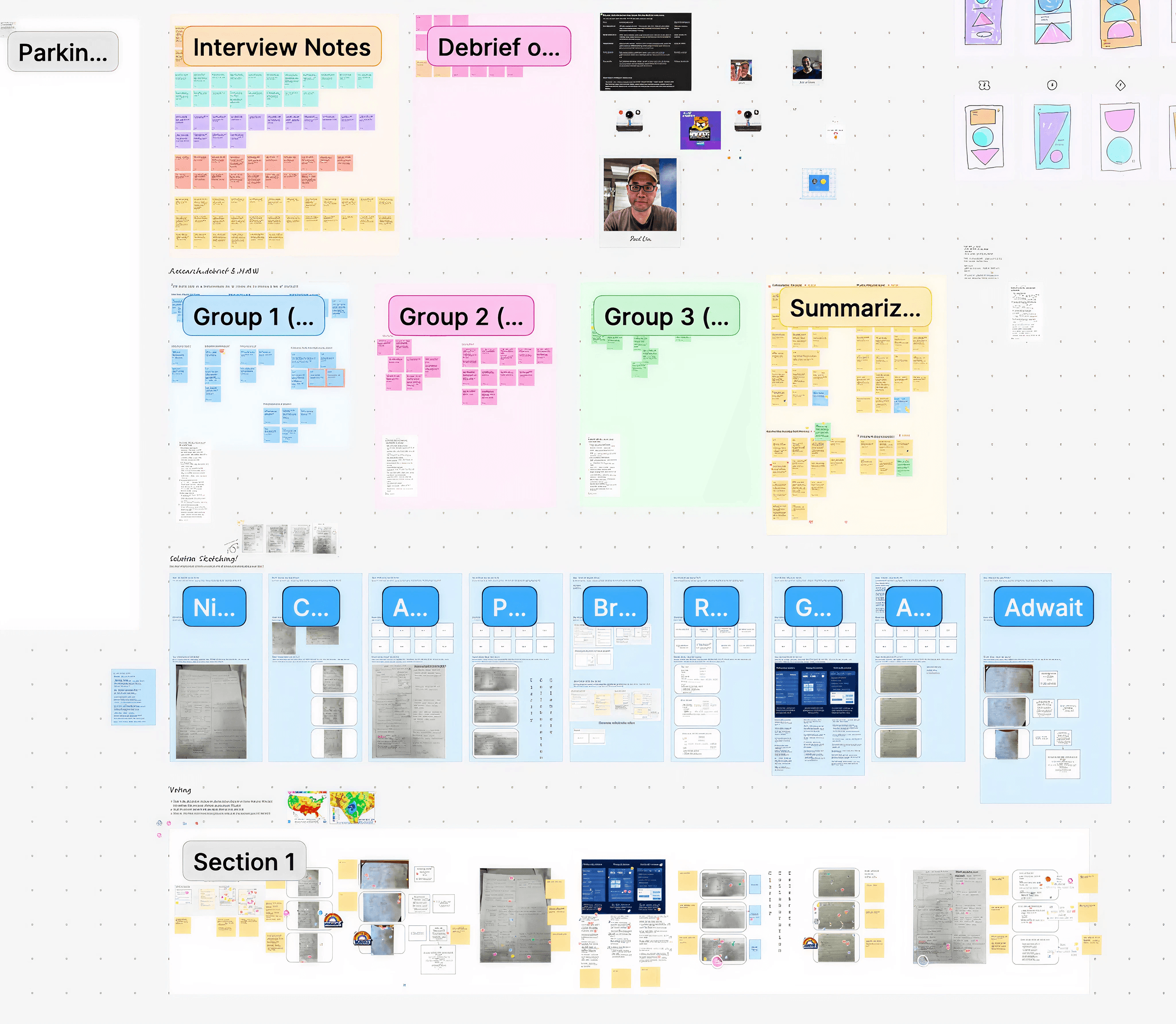
I partnered with a researcher to run a quick three-day sprint that brought stakeholders together to establish a shared understanding of the problem and move rapidly toward a tested prototype built from our assumptions. Testing revealed that the challenge for devs at this stage was actually unclear and constantly changing requirements. These insights pointed to a larger underlying problem around how teams were working together.
The discovery
Instead of making more arrows we need to stop the target
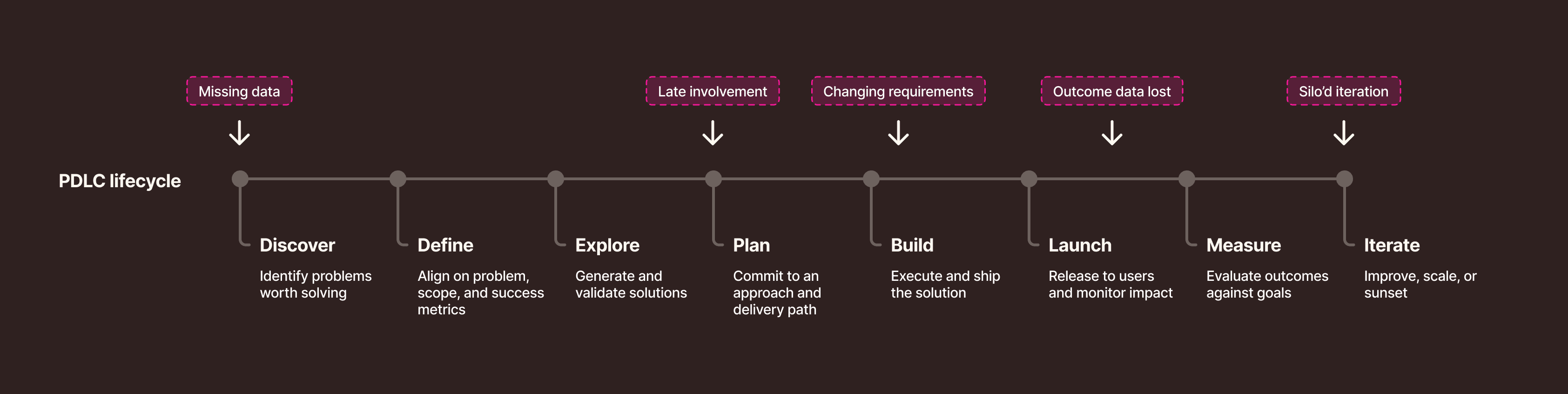
Archival insights pointed to a consistent set of cross-functional challenges:
Teams struggled to find decisions and learnings from other teams
Changing requirements caused churn and confusion, especially late in the development lifecycle.
Not involving the right people early enough in the process led to inefficiency.
These issues weren’t isolated pain points within product management, design, or engineering, they were symptoms of friction at the intersection of all three. Over time, these inefficiencies added up to more than $30 million in cost each year. Beyond the financial impact, this fragmentation constrained creativity.
Reframing the problem
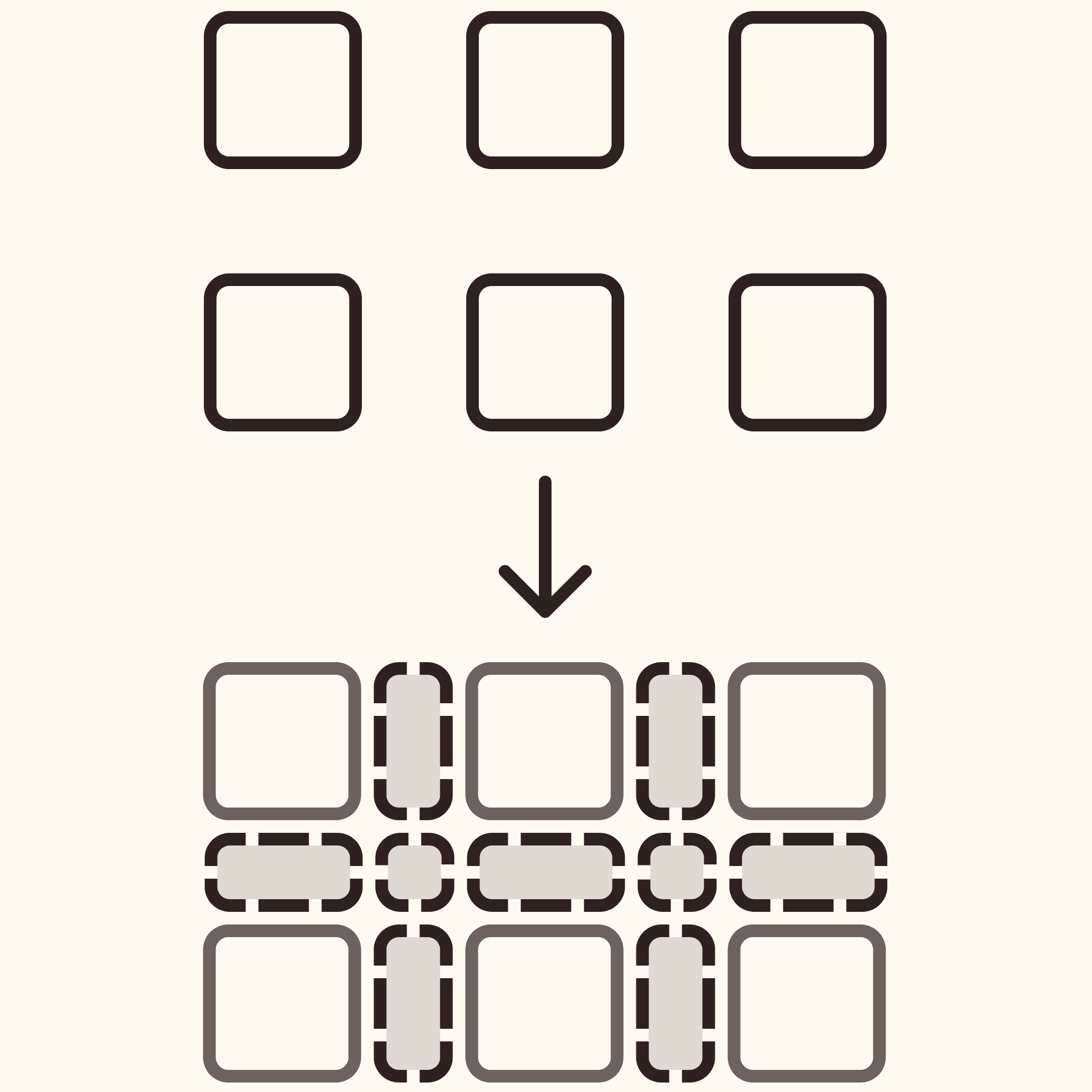
Empower teams to create easily rather than optimizing a singular task.
The underlying problem wasn’t how individuals executed work, but how creation and collaboration functioned within and across teams at Intuit. Rather than asking how we could help individuals do their jobs better, we focussed how we can empower teams to create better.
Converging towards a vision
What does it even mean to create?
To guide the development of the vision, I grounded my work in two foundational questions:
What is creation?
What is the ideal way to create as a team?
What is creation?
Converging the tracks
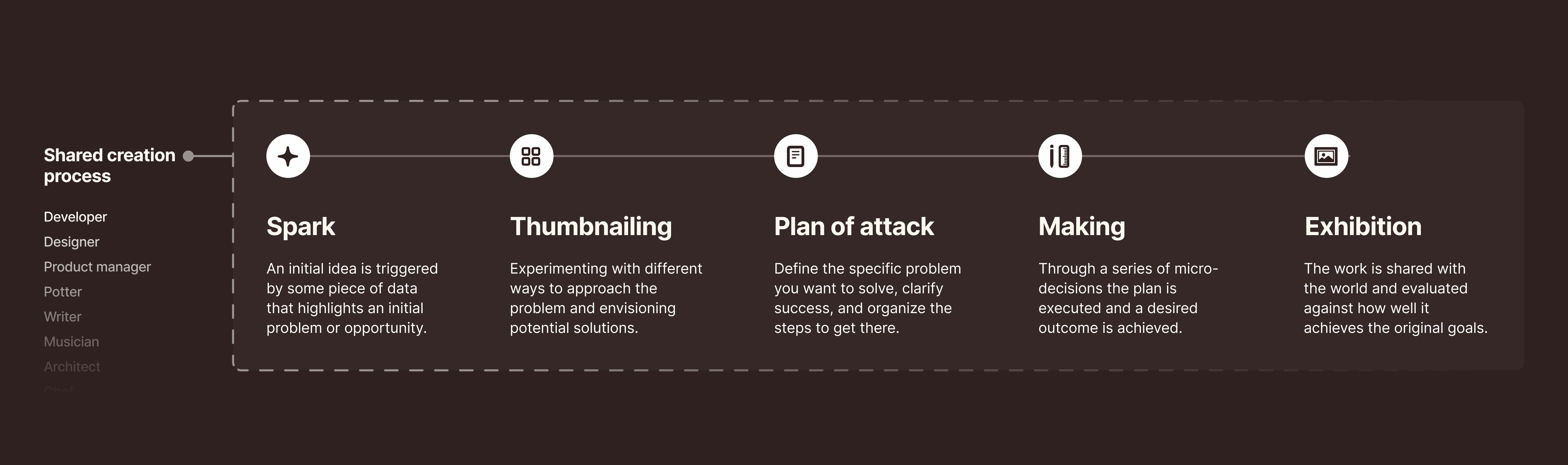
To understand what “creation” is, I examined creation journeys across disciplines from product management to painting. Despite differences in tools and outputs, the same patterns emerged. Creators follow a shared process and face the same foundational challenges.
Prior to this project the work tracks for PM, designer, and developer tooling were split across teams but the real opportunity was to solve for creation holistically, and apply the solution across roles.
What is the ideal way to create as a team?
What if every week was a hackathon week?
Across stakeholder interviews, one model was consistently cited as a benchmark for positive, effective collaboration: GED.
GED is Intuit's bi-annual hackathon week where anyone can form a team, prototype an idea, and demo it. GED created a platform for alignment, momentum, and confidence that teams wanted to replicate in everyday work.


Concept testing
From assumptions to testable concepts
Mapping the research pain points and GED’s strengths to the creation process highlighted plan of attack and making as the highest impact areas to address. For each phase, we identified open questions about the underlying causes of friction to get a set of assumptions we could test quickly. We ran a series of concept tests designed to isolate and validate the root issues within each phase.
Concept 1
Plan of attack
Explored whether helping teams define, track, and templatize tasks could reduce uncertainty and improve momentum early in a project.
Concept 2
Making
Concept Test outcomes
“This would be great… but only if everyone is using it.”
Testing the concepts with product managers, designers, and developers revealed a consistent theme: The effectiveness of the concepts is driven by collective usage. Without shared adoption, teams default to the tools they already use.
While teams saw value in the concepts, meaningful impact required broader adoption. Fully consolidating the company’s tool stack was out of scope, so we adjusted our approach. Rather than replacing tools, we focused on enabling cohesion across them.
The vision
A connective tissue binding the Intuit tool ecosystem.
The vision is a modular platform designed to give teams a shared source of truth. Utilizing a plugin model surfaces relevant data directly within existing tools, keeping teams aligned throughout the creation process.
Key designs
Upleveling tasks
Tasks were reimagined to be a medium for capturing decisions and key context. They became a surface for transparency and visibility rather than just a way to keep track of who is working on what. By anchoring decisions, files, and outcomes to the work, information that was hidden away in slack messages or solitary links is made available within and across teams.
Key designs
Logging data
Democratization of data is a key pillar of the vision. Learnings, insights and outcomes from working happening across the company is made available for anyone to see. Natural language search reduces the barrier of entry to begin engaging with data.
Key designs
Connecting disparate surfaces
A plugin allows information to flow between tools, bringing and retrieving the data needed for the work to move forward. Different information is prioritized depending on what the user is working on and what phase the work is in.
THE MVP
From vision to V1
To move from the vision and toward an MVP, we ran a prioritization session with product management and engineering partners across the different workstreams. The goal was to align on milestones for the vision. We chose to prioritize project creation and task tracking to create a platform where data could be stored. From this first milestone we could build out a system that supports the flow of data.
An unexpected end
While preparing to present the vision and MVP direction to leadership, the team was reorganized. As a result, the initiative was paused and ownership shifted before the work could move forward.
While the product itself didn’t ship, the process clarified the problem space, aligned multiple teams around a shared perspective, and influenced how collaboration and creation were discussed across workstreams.
Impact
$2M+ in projected savings
Based on MVP user testing across design, dev and PM personas.
Unified product direction
Aligned product and engineer teams on core user needs and future direction for the product.
Delivered MVP and vision
Delivered tested vision and MVP designs within short timeline to unblock development.
Learnings
The beauty of a POV
Developing a clear point of view proved to be one of the most effective tools for driving alignment. Taking the time to form my own researched opinions on creation allowed me to be a better partner, bringing a new perspective to the table.
Parallel workstreams
Projects are messy and non-linear. You don’t always have the luxury of time to create a polished vision before you need to deliver a V1. This project taught me the value of progressing toward the immediate needs of the project while shaping a long term direction in parallel.